
Country Guide: Canada
In Canada, the duty follows the room.
A wooden armchair classified as household furniture pays 9.5 per cent. The same chair classified for an office pays nothing. Brazil has paid the full most favoured nation rate since 2015, so there is no preference to soften the difference, and the compliance questions are the American ones asked in two languages.

Verified against primary sources on 10 November 2026, including the Canada Gazette, the consolidated text of the formaldehyde regulations and Health Canada's own verification report. Confirm every figure against the source before you price against it.
01What applies, and what does not
Canada has no trade agreement with Brazil and no negotiation with Mercosur that has reached application. Brazil was one of seventy two countries withdrawn from the General Preferential Tariff with effect from 1 January 2015, so a Brazilian piece pays the most favoured nation rate and there is nothing to claim.
That makes the classification the only lever, and in Canada the classification turns on something the piece itself does not show: whether it is for household use or not.
On the compliance side, two of the three American regimes have Canadian counterparts and one does not. Formaldehyde is regulated and the numbers are identical to the American ones. Stability and flammability have no product-specific regulation, which is not the same thing as no exposure. And one regime has no American counterpart at all, because the United States has only one official language.
02The duty, and the room
Canada splits its furniture tariff by end use. Office furniture of wood enters free. Kitchen, bedroom and other household furniture of wood pays 9.5 per cent. The same split runs through seating: an upholstered wooden-framed chair for the home pays 9.5, the same chair outside that heading pays nothing.
For a hospitality or contract buyer that is a straightforward advantage. For a retailer it is 9.5 points that cannot be avoided, only predicted. And for anyone buying a range that spans both, it means two pieces off the same production line can land at different rates.
Classification is a licensed customs broker reading your actual bill of materials and your actual end use, not a sourcing consultancy, and not a factory's invoice description. What a sourcing consultancy can do is make sure the question is asked while the range is still being costed, because a landed cost model that assumes one rate across a mixed range will be wrong on half of it.
Scroll the table sideways to compare every column.
| What it is | Heading | MFN rate |
|---|---|---|
| Office furniture of wood | 9403.30 | Free |
| Kitchen furniture of wood | 9403.40 | 9.5% |
| Bedroom furniture of wood | 9403.50 | 9.5% |
| Other furniture of wood, for domestic purposes | 9403.60.10 | 9.5% |
| Other furniture of wood, not for domestic purposes | 9403.60.90 | Free |
| Upholstered seats with wooden frames, for domestic purposes | 9401.61.10 | 9.5% |
| Upholstered seats with wooden frames, other | 9401.61.90 | Free |
| Office furniture of metal | 9403.10 | Free |
| Other furniture of metal | 9403.20 | 8% |
03The same numbers, a different label
The Formaldehyde Emissions from Composite Wood Products Regulations set the same limits as the American rule, measured the same way: 0.05 ppm for hardwood plywood, 0.09 for particleboard, 0.11 for medium-density fibreboard, 0.13 for thin MDF, and 0.05 for laminated products. A factory already certified to TSCA Title VI has answered the Canadian question too, because the regulations accept a TSCA Title VI certificate as a basis for compliance.
What does not carry over is the paperwork around it. The label has to be a stamp, tag or sticker securely affixed in a visible place, carrying the name of the manufacturer, importer or seller, the month and year of manufacture, and either the TSCA Title VI statement or “CANFER compliant / conforme au CANFER”. It has to be in English and French, in contrasting colour, at a type height of at least 2 millimetres. Items whose largest surface is 929 square centimetres or less are exempt.
And the importer has an obligation of its own. Within 60 days of starting to import, it has to notify the Minister in writing of its name, addresses, contact person and the types of product it handles, and update that within 30 days of any change. It keeps the supplier's statement of compliance and the purchase date of each finished good, for five years.
The California Air Resources Board is not named in the regulations. A CARB certificate is therefore not a basis for compliance in Canada, which catches buyers who were handed one and assumed North America was one market.
04Two things with no American counterpart
Language is a compliance regime
Federally, the Consumer Packaging and Labelling Act requires certain information on a consumer product's package and label in both English and French, including the product name and the declaration of net quantity.
Quebec goes further. The Charter of the French Language requires every inscription on a product sold in the Quebec market to be in French, and that reaches the container, the wrapping, the documents supplied with the product such as assembly instructions and warranty certificates, and the product catalogue. Another language may appear alongside French but cannot be given greater prominence.
Since 1 June 2025 a recognised non-French trademark may still appear on a product, but only where no French version is registered under the Trademarks Act, and descriptive or generic terms inside a trademark have to be translated, with the business name and the product name excepted.
The consequences are not nominal. Fines for failing to comply with an order run from C$3,000 to C$30,000 per day for a corporation, double on a second offence and triple after that, with each day counted as a separate offence, and a court may add a fine equal to the financial gain. A Brazilian factory printing a care label has never been asked to do it in two languages, and the label is printed long before anyone in Quebec sees it.
No regulation is not no exposure
Canada has no product-specific stability regulation for clothing storage units, and no flammability standard for upholstered furniture equivalent to the American one. A buyer who reads that as an absence of exposure has misread it.
Health Canada tests against the consensus standard anyway. Its 2021 to 2022 verification project took free-standing clothing storage units over 27 inches tall, tested them to ASTM F2057-19, and three of the nineteen failed the stability-with-load requirement and were voluntarily recalled. Health Canada notes its own sample was small and systematically selected, so it does not describe the market.
The practical reading is that the test is the same one the American rule mandates, and the consequence of failing it is a recall rather than a refused entry. A factory that cannot pass ASTM F2057 is a risk in Canada too; it is simply a risk that arrives after the goods are on the floor rather than at the border.
05Where this lands in a specification
Three of the four questions above are settled before a purchase order, and none of them by the factory on its own.
The end use written into the specification decides which tariff heading the piece falls under, and 9.5 points with it. The panel supplier decides whether the TSCA certificate that satisfies Canada actually exists, and that is a question about the panel mill rather than the furniture factory. The artwork sent for the care label and the assembly sheet decides whether the piece can be sold in Quebec, and artwork is approved months before shipping.
The fourth, stability, is settled on the production line rather than on paper, and it is the one that shows up last and costs most.
06What we do here, and what we do not
We are not customs brokers and we are not freight forwarders. We do not classify goods for entry, we do not file your notification to the Minister and we do not translate or approve label artwork.
What we do is read a specification against the four above before it is signed, and tell you which decisions move your landed cost and which decide whether the piece can be sold in every province. Then we verify in the plant whether the factory can hold what the specification says, and put the finding in writing.
We work for the buyer. No factory pays us, and we take no percentage of what you order.
07Sources
- Order Amending the General Preferential Tariff Withdrawal Order, SOR/2013-161, Canada Gazette Part II
- Formaldehyde Emissions from Composite Wood Products Regulations, SOR/2021-148, consolidated text
- Health Canada, Compliance Verification Project 2021-2022: Furniture Tip Over
- Canadian language laws, federal labelling and the Charter of the French Language
- Canadian customs tariff, Chapter 94 rates
- CBSA Memorandum D11-4-3, rules of origin respecting the Most-Favoured-Nation Tariff
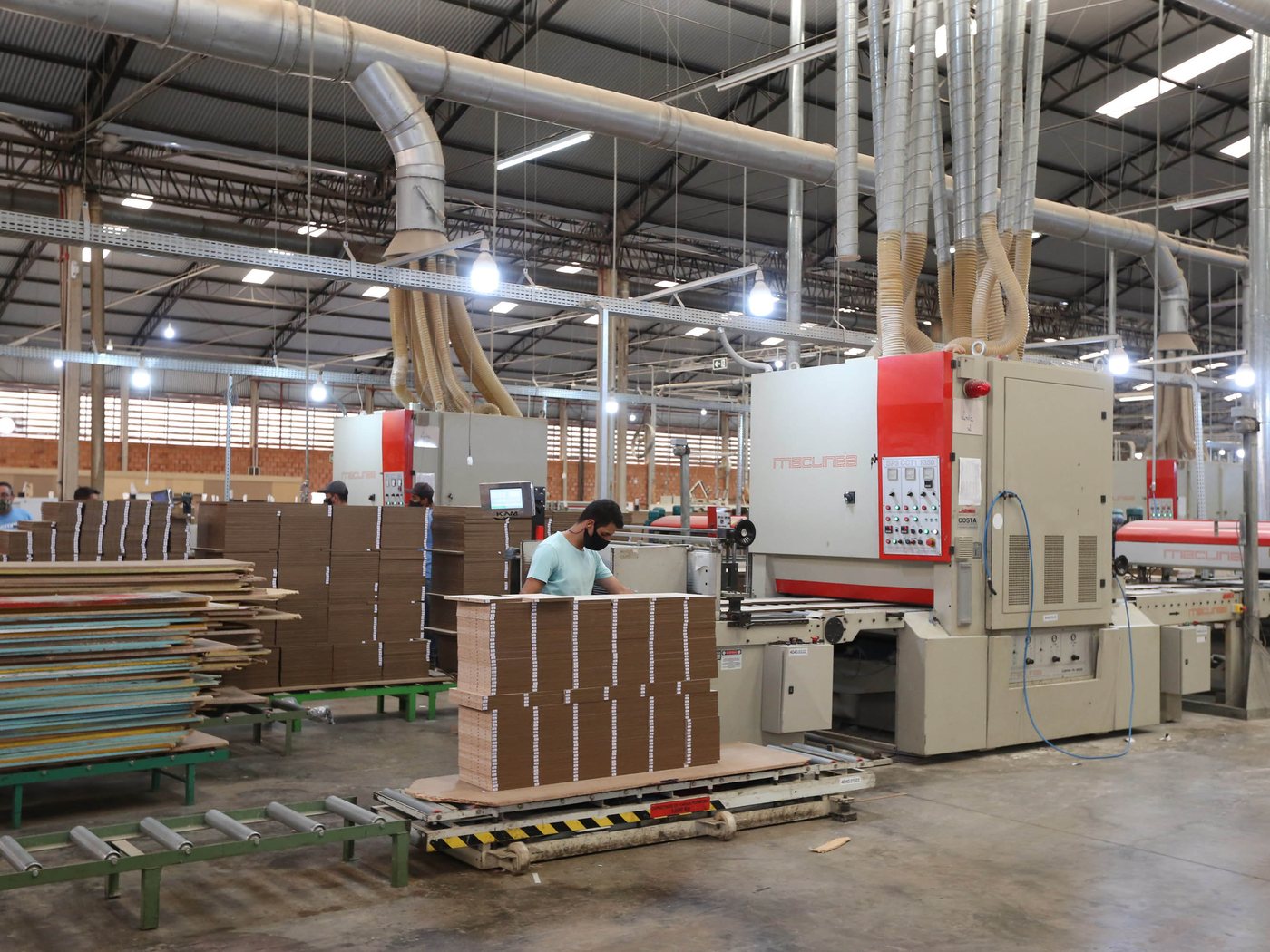
Country Guide: Canada
Start with the specification, not the shortlist.
Tell us what you are trying to buy and whether it is going into homes or into projects. In Canada that answer is worth 9.5 points before anything else is decided.