
Country Guide: United Arab Emirates
In the Emirates, the duty is five per cent, and you may never pay it.
This is the only one of our four destination markets where the duty is not worth engineering around. It is low, it is the same on almost everything, and whether it is charged at all depends on where the goods sit rather than on what they are. What a buyer has to get right here is the route, not the classification.
Verified against primary and industry sources on 10 November 2026. The MoIAT regulated product list is updated frequently and its scope was extended in August 2026, so confirm your own items against the current list rather than against this page.
01What applies
The Emirates apply the Gulf Cooperation Council common external tariff, five per cent on the cost, insurance and freight value, on almost everything. Value added tax is a further five per cent, charged on the CIF value plus the duty, and a business registered for VAT reclaims it.
There is no trade agreement between the Emirates and Brazil, and for once that does not matter. Five per cent is low enough that no classification argument is worth having, which is the opposite of Canada, where the same chair swings 9.5 points on how its end use is described.
What replaces the tariff question is a routing question, and it is bigger than the tariff ever was.
02Where the goods clear
Goods can enter a free zone on a transit declaration without paying duty. The duty is not waived, it is deferred, and it falls due when the goods leave the zone for the local market on a free zone to local declaration. Goods re-exported from the zone to another country carry no import duty liability at all.
For a buyer whose market is only the Emirates, that is a cash flow question. For a buyer serving the wider region from Dubai, it is the whole structure of the business: stock sits in the zone, duty is paid on the fraction that goes local, and the rest leaves for Saudi Arabia, Qatar, Oman, East Africa or South Asia having never been imported.
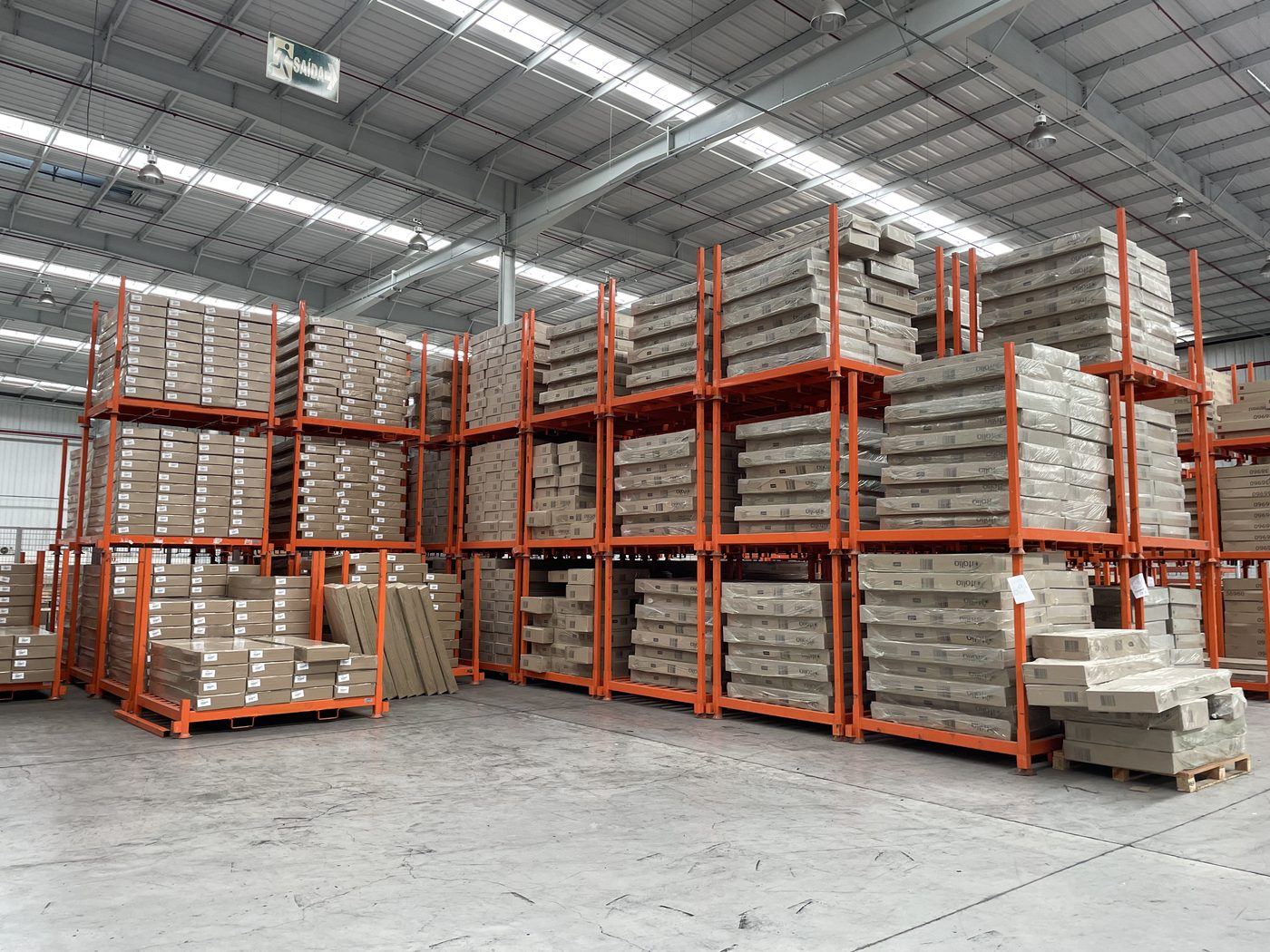
This is why the Emirates function as a re-export hub and why a Brazilian supplier selling into Dubai is often not selling into Dubai. It also changes what you should ask a factory for. A programme that will be broken into regional shipments out of a zone needs cartons, labelling and pack quantities built for that from the start, and a factory that has only ever shipped full containers to one consignee has never been asked.
Scroll the table sideways to compare every column.
| Route | Duty | When it is paid |
|---|---|---|
| Direct to the mainland | 5% on CIF | At import |
| Into a free zone | None at entry | Deferred |
| Free zone to the local market | 5% on CIF | On the free zone to local declaration |
| Re-exported from a free zone | None | Never |
| Value added tax, mainland | 5% on CIF plus duty | At import, reclaimable if registered |
03What five per cent does not buy you
A low uniform tariff does not mean a market with no friction. It means the friction has moved somewhere a landed cost spreadsheet does not look.
In the United States the friction is in the tariff line and it is visible in the first column of any quotation. In Europe it is in a file that has to reach back to the forest. In Canada it is in a classification and in two languages. In the Emirates it is in three places that none of those three share: the route the goods take, the conformity status of the items in a range that are not furniture, and a set of registrations that have to exist on the buyer's side before anything ships.
None of the three appears on an invoice, and none of them is a question a Brazilian factory has been asked before.
04Two things with no American counterpart
Because the tariff is not the lever here, the specification work is about the route rather than the rate.
If stock will sit in a zone and leave in regional shipments, the carton is a design decision and not a packing decision: pack quantity, pallet pattern, labelling and the ability to break a programme into part shipments all have to be set before the first production run. If part of the range is lighting or soft goods, those items carry a conformity obligation the furniture does not, and the lead time for that sits with the supplier of the component rather than with the furniture factory.
Neither of those is visible in a quotation. Both are expensive to discover after tooling.
The furniture is not regulated. What ships with it may be.
The Ministry of Industry and Advanced Technology runs the conformity schemes, the Emirates Conformity Assessment Scheme and the Emirates Quality Mark, against a list of regulated product categories. Furniture, upholstery, mattresses and wood panel are not named on the list we were able to verify.
Textiles are. Lighting products are. So are paints and varnishes, and low voltage electrical products. A furniture range is rarely only furniture: the lamp on the sideboard, the rug under the table and the cushions on the sofa can each sit in a regulated category while the sideboard, the table and the sofa do not.
The list is updated frequently and its scope was extended in August 2026 to add further consumer goods, textiles and lighting products. Treat the absence of furniture from it as a fact with a date on it, confirm your own items against the current list, and do that before you commit to a range rather than after.
The registrations that have to exist before anything ships
An importer needs a customs importer code and a trade licence covering import or trading, and which authority issues them depends on the route. A free zone company registers through its zone's customs desk. A mainland company registers through the emirate's department of economic development.
Declarations go through the emirate's own platform, Mirsal 2 in Dubai and the Advanced Trade Platform in Abu Dhabi, with the bill of lading or air waybill, the commercial invoice, a packing list carrying the tariff codes, and a certificate of origin.
None of this is difficult and all of it takes longer than a first-time importer expects. It is also the part no Brazilian factory can help with, because it sits entirely on the buyer's side of the transaction.
05Where this lands in a specification
Because the tariff is not the lever here, the specification work is about the route rather than the rate.
If stock will sit in a zone and leave in regional shipments, the carton is a design decision and not a packing decision: pack quantity, pallet pattern, labelling and the ability to break a programme into part shipments all have to be set before the first production run. If part of the range is lighting or soft goods, those items carry a conformity obligation the furniture does not, and the lead time for that sits with the supplier of the component rather than with the furniture factory.
Neither of those is visible in a quotation. Both are expensive to discover after tooling.
06What we do here, and what we do not
We are not customs brokers, we are not freight forwarders, and we do not set up companies or obtain licences in the Emirates. We do not file declarations and we do not sign anything on an importer's behalf.
What we do is read a specification against the route you intend to use before it is signed, and tell you which decisions have to be made at the factory rather than at the warehouse. Then we verify in the plant whether the factory can hold what the specification says, including the packing and part-shipment capability that a re-export programme depends on, and put the finding in writing.
We work for the buyer. No factory pays us, and we take no percentage of what you order.
07Sources
- Importing into the UAE: free zone against mainland, duty, VAT and declarations
- MoIAT regulated product categories and conformity schemes, SGS data sheet
- MoIAT regulated product list and the August 2026 scope extension
- ECAS and the Emirates Quality Mark explained
- GCC common external tariff, US International Trade Administration country guide
Country Guide: United Arab Emirates
Start with the route, not the shortlist.
Tell us where the goods will sit and where they will go next. In the Emirates that answer shapes the specification more than the product does.