Sourcing Decorative Accessories From Brazil: Capacity Is the Constraint, Not Price
Vista Furniture Co. is an independent sourcing consultancy in São Paulo. We work for furniture buyers, never for factories.
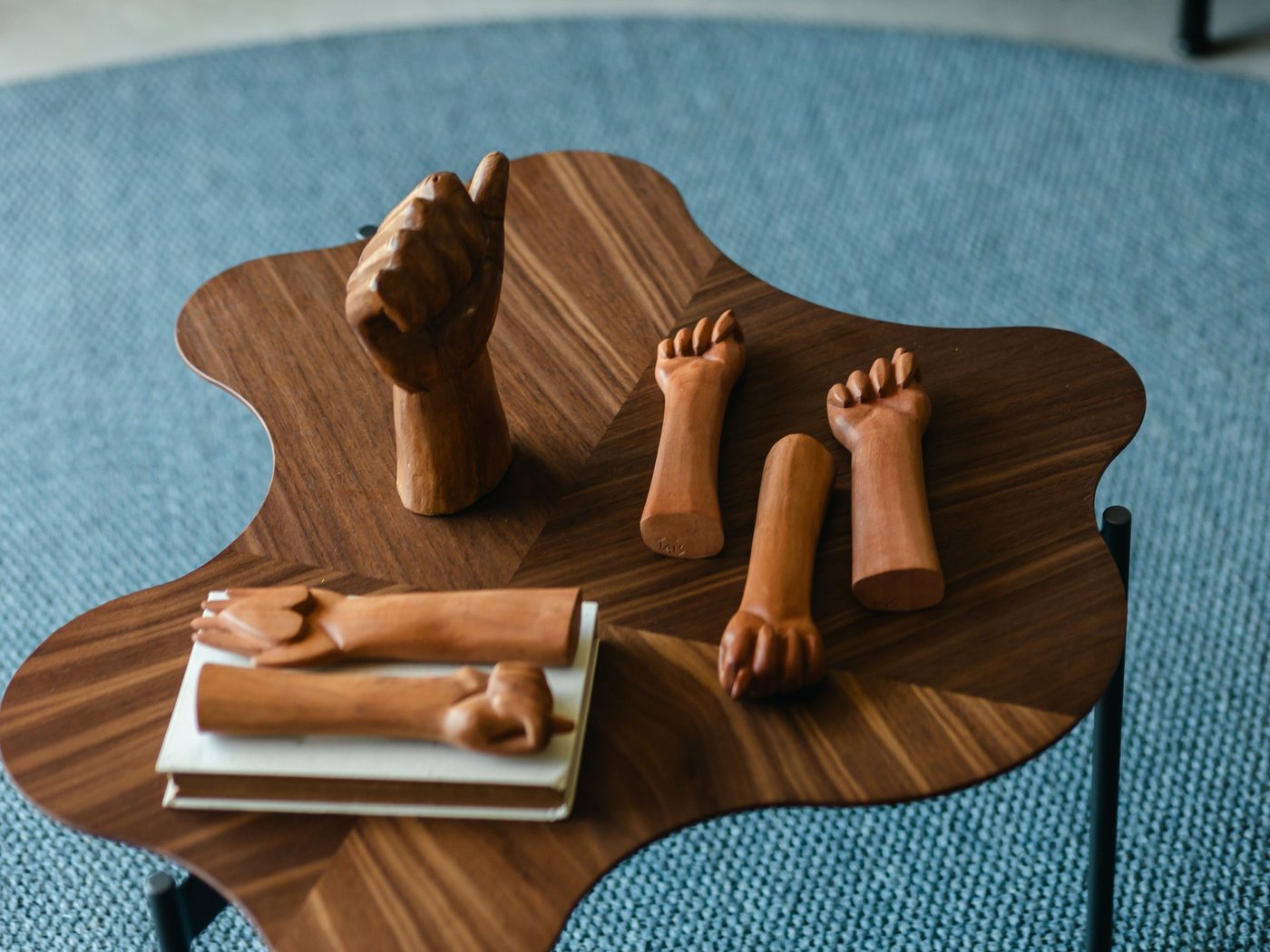
Almost every furniture programme eventually needs objects. Vessels, bowls, trays, lighting-adjacent pieces, textiles, baskets, mirrors and the things that make a room photograph. Buyers ask us for them constantly, usually late, usually as a line item at the end of a range they have already placed.
Brazil is unusually strong here, and the reason it is strong is the same reason it is difficult. The work comes from ceramics studios, glassworks, small metal shops, woodturning workshops and craft cooperatives rather than from factories. That gives you material and authorship you will not find in a catalogue. It also means the constraint is almost never price. It is capacity, consistency and, in at least one well-known material, the law.
Who actually makes decorative objects in Brazil
Four different kinds of supplier, with four different commercial logics.
Design studios and ateliers. Authored work, small editions, a named designer, and a price that reflects both. This is the world the SP-Arte floor opens onto and it is bought the way art is bought, piece by piece and with the authorship settled in writing.
Specialist industrial makers. Ceramics, glass and metal shops that run real production, serve the Brazilian retail and hospitality market and can repeat a shape. These are the suppliers a buyer wants for a programme, and they are the hardest to find because very few of them export and almost none market in English.
Craft cooperatives. Community-based, often in the North and Northeast, working in natural fibre, clay and textile. Extraordinary material, genuine provenance, and a hard ceiling on output that no purchase order can raise.
Furniture factories with a side line. Offcut-driven objects made between runs. Convenient if you are already placing furniture with the plant, and rarely the reason to choose it.
Knowing which of the four you are talking to decides everything that follows. Our guide to landing on the wrong factory makes the same argument for furniture, and it applies here with the volumes divided by a hundred.
The capacity ceiling is real, and it is the first thing to establish
A ceramics studio that produces two thousand pieces a month is a substantial Brazilian supplier. For a retailer planning a hundred-door rollout, two thousand pieces a month is not a programme, it is a pilot.
This is not a failing of the supplier. It is the shape of the industry, and it is why we ask for the quantity and the drop date before we ask for anything else. The conversation that follows is one of three: the volume fits and we proceed, the volume can be built up across several makers with the variation that implies, or the volume does not exist in Brazil at that price and we say so.
Handmade also means variation, and variation has to be specified rather than discovered. A glaze that moves across a kiln load, a fibre that changes colour with the harvest, a hand-thrown wall thickness that varies by two millimetres. Decide what the acceptable range is, photograph the limits, and make those photographs part of the order. That is the same discipline described in quality control and inspection in Brazil, applied to a product where the tolerance is wider and the judgment is aesthetic.
One material you cannot simply order
Capim dourado, the golden fibre from the Jalapão region of Tocantins, is probably the best known Brazilian craft material internationally. It is also regulated at the point of harvest.
The Instituto Natureza do Tocantins, the state environmental agency, sets the rules for harvesting the stems, through Portaria 092/2005, later reissued as Portaria 362/2007, with the stated aim of preventing the species from dying out. Harvest opens on a fixed date in September rather than running year round, and the agency enforces it: in one recent operation it seized more than eight kilos of fibre taken outside the rules.
For a buyer, the practical consequences are concrete. Supply is seasonal, not continuous. The volume available in a given year is bounded by what was legally harvested. And a supplier offering unlimited quantities at short notice is telling you something about where the fibre came from. We treat that the way we treat timber provenance under the EUDR and the Lacey Act, as a question to be answered with documents rather than assurances.
Other natural fibres carry their own rules and their own seasons. The general point holds: in this category the material can be the constraint, and it is worth establishing before a range is designed around it.
Compliance is narrower here, but it is not absent
Decorative objects usually escape the furniture standards and pick up different ones.
Anything that could touch food, which includes a great many bowls, platters and vessels sold as decorative, falls under food-contact rules in the destination, and ceramics specifically face leachable lead and cadmium limits. Anything sold into California carries Proposition 65 exposure. Anything marketed to children, including nursery decoration, falls under the CPSIA regime described in our guide to children's furniture. Anything containing timber falls under the same legality rules as furniture does.
The recurring failure is not a product that breaches a limit. It is a product that was never classified, because the buyer treated it as decorative and the supplier had never been asked. Deciding what the object legally is, before the order, is most of the work.
How the commercial terms differ from furniture
Minimums are lower and the logic inverts. A factory sets a minimum because of a setup cost. A studio sets one because of a kiln load, a dye bath or a single maker's week. That means the useful question is not how low the minimum goes but how the order fits the production unit.
Lead times are often longer than for furniture, not shorter, because the work is sequential rather than parallel. Consolidation matters more than it does in any other category: objects from six makers in four states have to arrive at one place, be inspected together and ship as one, and who holds that risk belongs in the contract rather than in a conversation. The costs that show up at this stage are the ones catalogued in the hidden costs buyers ignore.
And authorship has to be settled. When the piece carries a designer's hand, the right to produce it, the exclusivity and the territory are commercial terms, not courtesies. That is one of the four things we look for in collection work, set out on the method page.
What we do and what we do not do here
We find the makers, verify that they are what they appear to be, establish real capacity against your volume, settle the variation standard and the authorship, and coordinate consolidation. We do not hold stock, we do not buy and resell, and we take nothing from the maker. The FAQ sets out who pays us.
Decorative accessories are also the category where a small buyer and a large one look most alike, because the ceiling is the maker's, not the budget's. Price point is its own category and we work at both ends of it, which the FAQ covers.
If you have a range that needs objects, or a concept that starts with the objects and works outward, tell us what you are trying to buy, with the quantity and the drop date. In this category those two numbers decide the answer.
Sources
- Instituto Natureza do Tocantins (Naturatins), Portaria 092/2005, reissued as Portaria 362/2007, on the harvest of capim dourado in the Jalapão region, as documented by Cerratinga.
- Government of Tocantins, Naturatins seizure of capim dourado harvested outside the rules.
- US Consumer Product Safety Commission, CPSIA requirements for children's products.
Matheus Ximenes Pinho is the founder and managing director of Vista Furniture Co. He has spent more than twenty years in home and décor, fourteen of them in the Brazilian furniture industry, working across product design, manufacturing, and digital retail. He advises international retailers, brands, hotel groups, and developers on sourcing furniture in Brazil with less risk and better decisions.
Vista Furniture Co. is a buyer-side furniture sourcing consultancy founded by veterans of Brazil's furniture and home industry. We work with global retailers, brands, and hospitality buyers in two ways: qualifying suppliers and reducing risk before the first order, and developing collections built for the buyer's market. We are buyer-paid and independent. You buy directly from the supplier you select. Talk to us before your next order.
