Sourcing Panel Furniture From Brazil: MDF, MDP and What the Specification Has to Say
Vista Furniture Co. is an independent sourcing consultancy in São Paulo. We work for furniture buyers, never for factories.
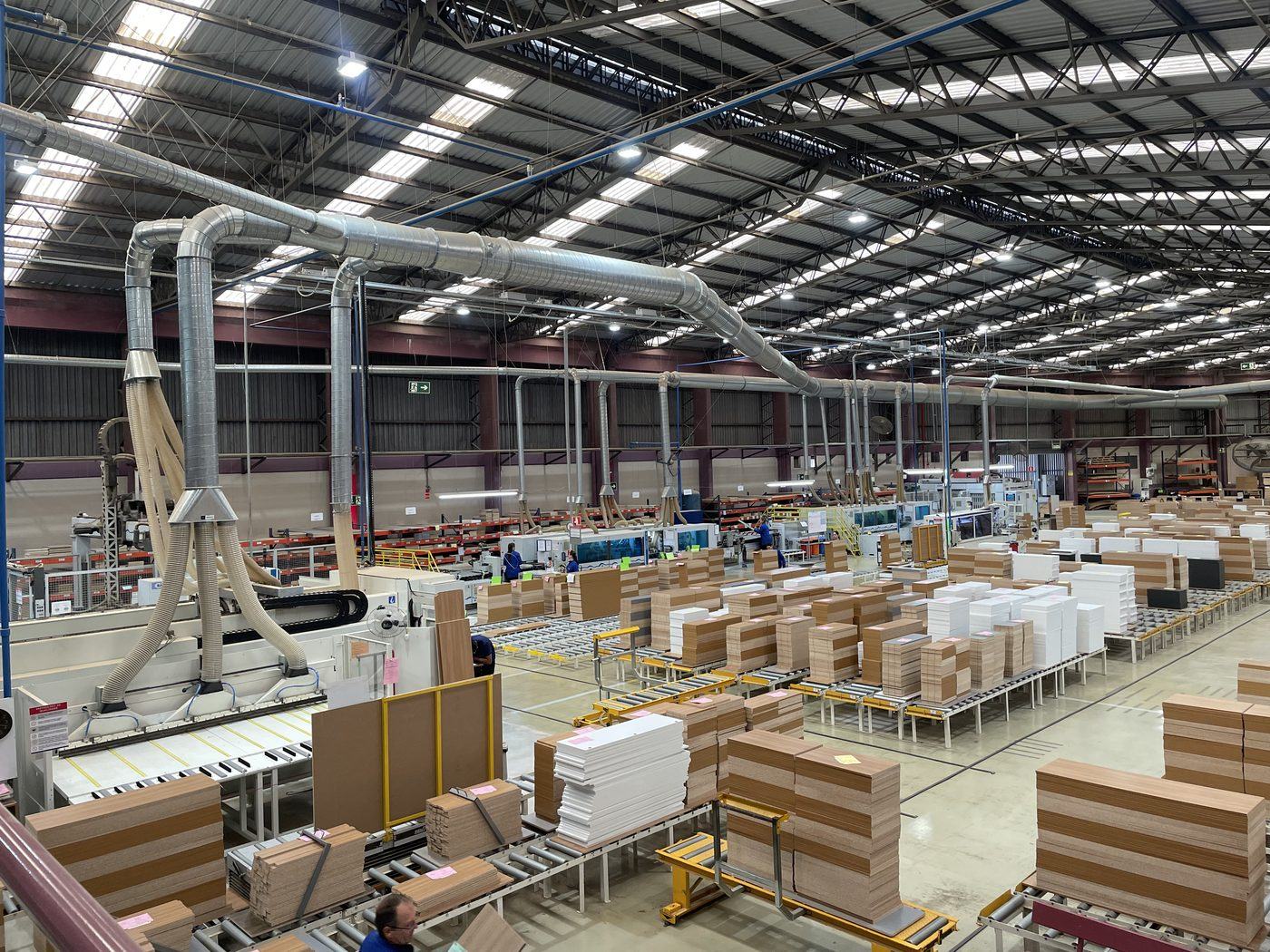
Most buyers who ask us about Brazil are thinking about solid wood. That is the country's reputation and, in the categories where it holds, it is deserved. But a large share of what Brazilian factories actually make is panel: MDF, MDP and melamine-faced board, cut, edged, drilled and packed. Wardrobes, bedroom sets, office furniture, kitchen cabinetry, TV units, bookcases and almost everything a mass retailer sells at an opening price.
The reason that matters commercially is simple. Panel is where price position lives. If your programme has to land at a number, you are buying panel, and the question is not whether Brazil can make it. It is which plant, under which specification, and at what emission standard for the market you are shipping into.
How big the Brazilian panel industry actually is
Brazil sits among the world's ten largest producers of reconstituted wood panels. According to Indústria Brasileira de Árvores, the sector body, the country produced 8.2 million cubic metres of reconstituted panels in 2018 and exported roughly sixteen percent of it, the rest going to the domestic market. The ranking has held since.
That last number is the one to read carefully. A sector that sends six of every seven cubic metres to Brazilian buyers is a sector whose defaults are Brazilian. Standard thicknesses, standard finishes, standard hardware, standard cartons, and a commercial culture built around a customer who can call the plant and drive there. None of that is a problem. It is simply not the same as a supply chain built for export, and the gap between the two is where a first panel programme usually fails.
Capacity is also not evenly spread. IBÁ's 2026 sector manual puts São Paulo second nationally in reconstituted panel exports, with 28.5 percent of the total, and records Santa Catarina exporting around 550 thousand cubic metres worth about US$ 137 million in 2024. The furniture plants that consume those panels cluster differently again, which is the subject of our guide to Brazil's manufacturing regions.
MDF and MDP are not interchangeable, and quotes rarely say which
MDF is fibre, pressed from refined wood fibre and resin into a dense, homogeneous board. It machines cleanly, takes a profiled edge, holds a routed detail and finishes well under paint or foil. MDP, which the rest of the world usually calls particleboard, is chip. It is lighter, cheaper, structurally adequate under a laminate face and visibly poorer at anything that involves cutting into the edge.
Both are sold as panel. Both appear in quotes as panel. A buyer comparing two prices on what looks like the same wardrobe is very often comparing MDF against MDP, and the forty percent spread that follows is not a negotiating position, it is a materials difference that nobody wrote down. We have written separately about why a quote spread is a map rather than a price signal.
The specification has to name the substrate for each part, not for the piece. A carcase in MDP with an MDF door is a normal, sensible, cost-driven decision. A carcase in MDP with an MDF door that the buyer believed was MDF throughout is a returns problem eighteen months later.
Formaldehyde is the compliance line, and it decides the factory
Composite wood carries formaldehyde from the resin that binds it. Every significant destination regulates it, and the regulations apply to the finished furniture, not only to the raw board.
For the United States, TSCA Title VI has required since 1 June 2018 that hardwood plywood, MDF and particleboard, including the panel inside imported finished goods, be certified by a third party certifier recognised by the EPA. The EPA has set its limits at the same levels as California's CARB ATCM Phase 2. Since 22 March 2019, imported product can no longer rely on CARB reciprocity: it must be certified by an EPA-recognised TSCA Title VI third party certifier, and it must carry a label stating TSCA Title VI compliance at the point of entry into the United States.
That is a specific, verifiable thing. A Brazilian panel supplier either holds current certification from a recognised certifier or it does not, and the furniture factory buying that panel either keeps the documentation that ties a given lot to a given certificate or it does not. The second half is where programmes come apart, because the factory is compliant and the paperwork chain is not.
For the European Union the equivalent conversation runs through EN 13986 and the E1 class, and for a buyer shipping into both markets the specification has to carry both. Our guide to furniture import compliance for the US and EU sets out how the two regimes differ in practice.
One more thing worth knowing: formaldehyde is a separate question from timber legality. The EUDR and the Lacey Act ask where the wood came from. TSCA Title VI asks what comes out of it. A supplier can satisfy one and fail the other.
The four things that actually decide a panel programme
Edge banding. The edge is the first thing that fails and the easiest thing to downgrade without telling anyone. PVC, ABS, PP and laser-applied edges behave differently under heat, humidity and a container crossing the equator. The adhesive matters as much as the tape. A sample edged on a laser machine and a production run edged with EVA hot melt are two different products that photograph identically.
Hardware. Panel furniture is a hardware assembly held together by board. Hinges, drawer runners, cam locks and dowels decide whether the piece survives, and they are the easiest line to substitute between the approved sample and the third container. If your specification names a hardware brand and series, say whether an equivalent is acceptable and who decides what equivalent means.
Moisture and dimensional stability. Panel moves less than solid timber but it does move, and a wardrobe built in a humid coastal plant and sold in a dry heated market will tell you so. The mechanism is the same one we describe in our guide to wood moisture content in Brazilian furniture export.
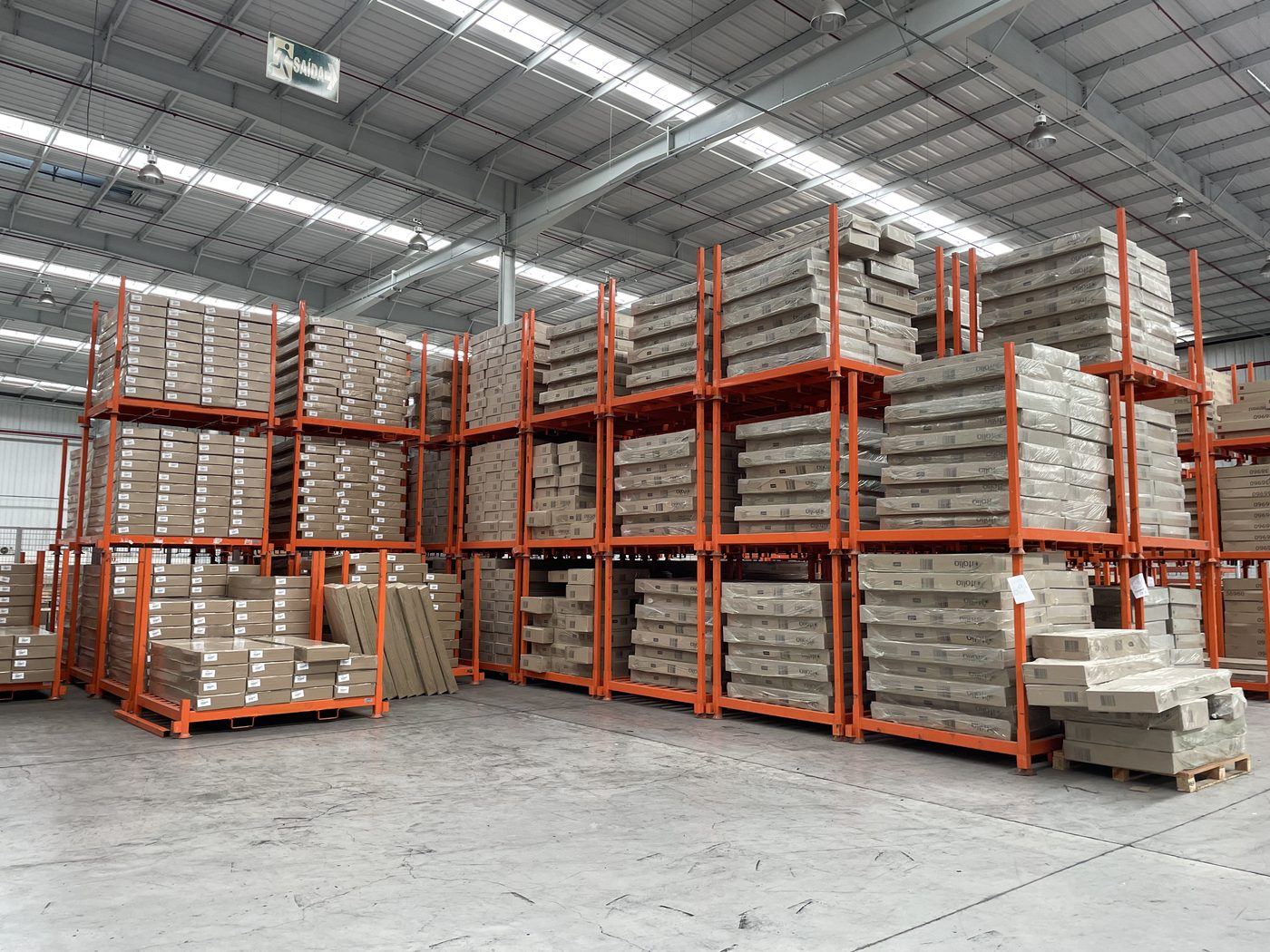
Packing. Panel is heavy, flat, and brittle at the corner. More panel furniture is damaged between the press and the shelf than is damaged in use. If the programme is ready-to-assemble the packing is the product, which is the argument we make at length in flat-pack versus assembled furniture from Brazil, and it is doubly true for anyone shipping into a parcel network such as Amazon FBA.
Where Brazil does not win in panel, and why we say so
At high volume into North America or Europe, on a price-led programme in panel, Brazil is usually not the right origin. Poland is the largest producer of IKEA's furniture and built its export position on exactly this category. China prices below both. We set this out on the RTA and flat-pack category page rather than burying it, because a buyer who finds out on the third quote has wasted a quarter.
The comparison changes in two situations. Inside Mercosur and across Latin America, Polish and Chinese goods arrive carrying the common external tariff and an ocean crossing that Brazilian goods do not, and the arithmetic inverts. And on programmes where panel is part of a mixed range rather than the whole of it, keeping the solid wood, the upholstery and the panel inside one country and one time zone is worth real money in coordination, as anyone who has run a three-origin bedroom programme knows.
Price point is a category of its own, and we work at both ends of it. The FAQ says so plainly, including where Brazil does not hold at the number.
What a buyer should do before the first RFQ
Write the substrate into the specification part by part. Name the emission standard for the destination and ask for the certificate, not the claim. Name the edge material and the adhesive. Name the hardware or name what equivalence means. State the packing standard and who pays for a drop test. Then send that to a shortlist built on what each plant actually runs, rather than to everyone in a fair directory.
That last step is the one we do. Panel plants are easy to find and hard to tell apart from a website, because they all photograph the same beam saw. What separates them is run size, the customers they already serve, the certification they actually hold and whether they have shipped a container to your destination before. Verifying that is the subject of our guide to factory audits in Brazil, and it is the work that comes before anyone quotes.
If you are weighing a panel programme in Brazil against another origin, or you have quotes in hand that do not agree with each other, tell us what you are trying to buy. We will say whether Brazil holds at your number, including when it does not.
Sources
- Indústria Brasileira de Árvores (IBÁ), Relatório Ibá, panel production and export share, 2018 data; and Manual do Setor, 2026, for state-level export figures.
- United States Environmental Protection Agency, Formaldehyde Emission Standards for Composite Wood Products, TSCA Title VI, 40 CFR Part 770.
- California Air Resources Board, Airborne Toxic Control Measure for composite wood products, Phase 2.
Matheus Ximenes Pinho is the founder and managing director of Vista Furniture Co. He has spent more than twenty years in home and décor, fourteen of them in the Brazilian furniture industry, working across product design, manufacturing, and digital retail. He advises international retailers, brands, hotel groups, and developers on sourcing furniture in Brazil with less risk and better decisions.
Vista Furniture Co. is a buyer-side furniture sourcing consultancy founded by veterans of Brazil's furniture and home industry. We work with global retailers, brands, and hospitality buyers in two ways: qualifying suppliers and reducing risk before the first order, and developing collections built for the buyer's market. We are buyer-paid and independent. You buy directly from the supplier you select. Talk to us before your next order.
