Sourcing Upholstered Furniture From Brazil: A Buyer's Guide
Written by Matheus Ximenes Pinho, founder and managing director of Vista Furniture Co.
Vista Furniture Co. is an independent sourcing consultancy in São Paulo. We work for furniture buyers, never for factories.
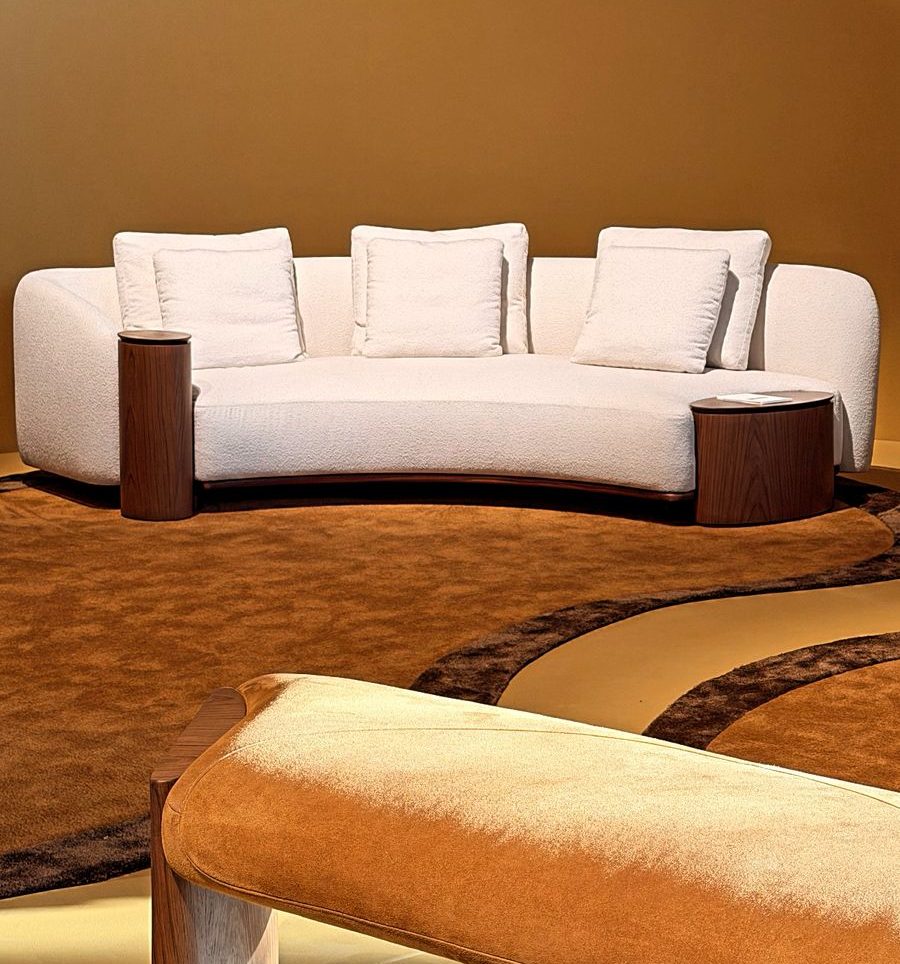
Upholstery is where furniture sourcing gets genuinely risky, and the reason is simple: almost everything that decides quality is hidden. A dining table shows you its joinery and its finish. A sofa shows you a cover, and behind that cover sit the frame, the suspension, and the foam that actually determine whether the piece lasts fifteen years or sags in eighteen months. Two sofas can look identical on a showroom floor and share almost nothing underneath. For a buyer sourcing upholstered furniture from Brazil, learning to read what is inside the piece is the whole job, and Brazil is a good place to do it. This guide covers why, what to look for, and what to verify before you commit.
Why Brazil for upholstered furniture
Brazil's advantage in upholstery starts with the same thing that anchors its whole furniture industry: wood. A good upholstered frame is built from kiln-dried hardwood, and Brazil sits on one of the world's largest planted-forest bases, with the sawmilling and drying capacity to supply it. The country also carries the rest of the chain in-country: foam and fiber producers, fabric and leather suppliers, and a large pool of skilled upholstery labor built up over decades of serving a demanding domestic sofa market. That domestic scale matters more than it looks. A country where millions of sofas are made and sold every year develops the tooling, the material supply, and the hand skills that a buyer then gets to draw on, rather than a thin base stretched to fill an occasional order. If you want the wider material picture, our guide to sourcing solid wood furniture covers the frame side, and the broader case sits in sourcing Brazilian furniture. Brazil already makes upholstered seating at a high level, which is why it is a strong destination for sofa manufacturing. The question, as always, is which factory, and how you verify it.
The anatomy of a good upholstered piece
To source upholstery well, you have to know what you are paying for underneath the cover. Four systems decide quality, and none of them is visible once the piece is finished.
The frame
The frame is the skeleton, and if it fails the whole piece is scrap. The standard for a lasting frame is solid kiln-dried hardwood, species like oak, maple, ash, or beech, dried to a moisture content of roughly six to eight percent so the wood does not shrink, swell, or crack as it moves between climates. That last point matters more in sourcing than in a domestic sale, because a frame built and dried for a humid Brazilian factory and shipped to a dry, heated home can move if the moisture content was never specified for the destination. Joinery is the second half: look for mortise-and-tenon joints, wooden dowels, and corner blocks that are glued and screwed. Frames held together with staples and glue, or built from softwood or particleboard, are where budget pieces fail early.
The suspension
Between the frame and the cushions sits the suspension, which carries the weight of everyone who sits down. There are two systems worth knowing. Eight-way hand-tied springs are the traditional mark of better construction: individual coils tied by hand to the frame and to each other in eight directions, so they move together and distribute weight evenly without bottoming out. It is slow, skilled work, which is part of why it signals a serious factory. Sinuous springs, the S-shaped wires that run front to back, are the other common system, reliable and well suited to lower, contemporary silhouettes. Both are legitimate. Loose webbing or jute alone, without a proper spring system, is the warning sign.
The foam and cushions
Comfort and longevity live in the cushion. High-resilience foam holds its shape and support far better than commodity foam, and density is the number that separates the two. Mid-range quality tends to start around 1.8 pounds per cubic foot, and better seating runs to 2.4 or 2.5 and above, often wrapped in fiber or a foam-and-down hybrid for feel. For contract and heavy-use seating, foam is also specified by its firmness, or ILD, which is why a serious upholstery brief reads like an engineering document rather than a catalogue. Foam that is too soft or too light is the reason a cushion looks tired within a year.
The cover
The cover is the part a buyer can see, and even here the quality markers are specific. Fabric durability is measured in double rubs on the Wyzenbeek scale in the United States, and in cycles on the Martindale scale in Europe. For heavy home use, buyers look for roughly 25,000 to 50,000 double rubs, and contract settings climb well beyond that. Beyond the rub count, the craft shows in the tailoring: seams straight and evenly tensioned, patterns matched across panels so a stripe or weave continues unbroken, and an opaque dust cover underneath rather than thin netting. In leather, full-grain and top-grain are the durable choices, while bonded leather peels and should be treated as a different product entirely. Structural testing for seating follows ANSI/BIFMA standards, and the frame wood is worth confirming as legal and certified, which FSC documentation supports.
Fire safety and compliance
Upholstered furniture is the one category where safety regulation bites hardest, because filled seating burns. In the United States, the baseline is California Technical Bulletin 117-2013, a cigarette smolder test, and public-occupancy work may reference the stricter open-flame TB 133. In the United Kingdom and much of the international market, BS 5852 with the Crib 5 ignition source tests the fabric and foam together against an open flame. The single most common mistake a buyer makes here is accepting a fire report for the foam alone, when fire behavior depends on the fabric and foam as a system. Ask for a composite test on the finished piece as it will ship.
On top of fire, any composite wood in the frame or base falls under formaldehyde limits for the United States and the European Union, and the timber has to be legal and traceable. We cover the whole regulatory stack in furniture compliance for the US and EU, and a factory's ability to produce this paperwork cleanly is one of the fastest ways to tell a serious supplier from a hopeful one. For contract and hospitality upholstery, the standards climb further, which we cover in sourcing hospitality and contract furniture.
A note on leather
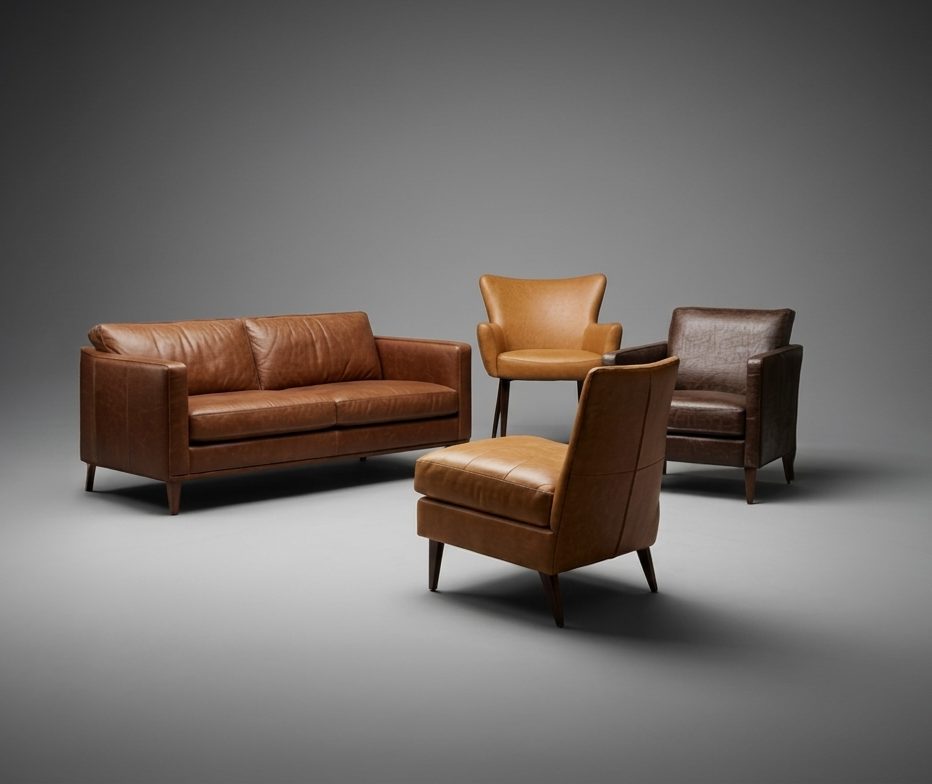
For leather upholstery, Brazil is not a secondary option. It is one of the world's largest cattle and leather producers, with a tanning industry that supplies furniture, footwear, and automotive markets across the globe. For a buyer, that means real depth of supply and competitive access to full-grain and top-grain hides, the durable grades that matter for seating.
It also means one extra layer of diligence. Leather carries its own origin questions, and the European Union's deforestation rules now reach cattle products, not only timber. A buyer sourcing leather furniture for the EU should expect to document where the hide came from, the same way they would for wood. In practice this reinforces the point that runs through all upholstery sourcing: the supplier who can answer the origin question cleanly is usually the stronger supplier on every other measure too. The destination rules are covered in furniture compliance for the US and EU.
Why upholstery punishes the sample-to-production gap
Every furniture category has a gap between the sample and the production run. In upholstery it is wider, because so much of the work is done by hand. A single skilled upholsterer can hand-tie only one or two frames a day, and every cover is cut, sewn, and pulled by a person. That means the sample a factory sends, often built by its most senior craftsman, is not a reliable promise about unit four hundred coming off a different bench. Consistency across a real run, in seam quality, in cushion fill, in pattern matching, is a separate capability from making one beautiful piece. It is also invisible from a photograph and from a showroom, which is exactly why verifying it matters, and why pre-shipment inspection carries more weight in this category than in any other.
Sourcing by channel
The right upholstery specification depends on where the piece is going.
- Retail. Consistency and margin dominate. The priority is a factory that holds the same construction across repeat orders, so a customer who buys the floor model gets the floor model.
- Direct-to-consumer. Product often has to travel to the customer well, which favors construction that ships without damage, such as removable legs and modular sections, without cutting the frame or foam quality that returns and reviews will expose.
- Contract and hospitality. Fire and durability standards move from optional to mandatory, and the abrasion, foam, and structural specifications all step up. A factory that has never built to these standards will not anticipate them.
A capable upholstery factory can usually serve more than one of these, but the specification, and the verification, change with the destination. Where the same upholstered furniture has to repeat across many units, our guides to FF&E sourcing for real estate developers and restaurant chain furniture sourcing cover what changes at that scale.
What to verify before you buy
Before committing to an upholstery supplier in Brazil, a buyer should be able to confirm, in writing and ideally in person:
- The frame: solid kiln-dried hardwood, with moisture content specified for the destination climate, and joinery beyond staples and glue.
- The suspension: eight-way hand-tied or quality sinuous springs, not bare webbing.
- The foam: high-resilience, with density and, for heavy use, ILD specified rather than left vague.
- The cover: a documented Wyzenbeek or Martindale rub count for the actual fabric, and pattern matching and tailoring you have inspected.
- Fire safety: composite test reports for the finished assembly, to TB 117-2013, TB 133, or BS 5852 Crib 5 as your market requires.
- Consistency: evidence the factory holds quality across a full run, not just a sample.
Answering these is the discipline in how to vet a furniture factory, and with upholstery it almost always means opening the piece and seeing the line, not just reviewing the cover.
How Vista helps
Vista Furniture Co. is a buyer-side sourcing consultancy, and upholstered furniture is a category where independent, on-the-ground judgment earns its keep, because the quality is inside the piece. We find and qualify the upholstery factories in Brazil that fit your program, including the capable makers you cannot reach from abroad, and we verify them in person, checking the frame, the suspension, and the foam, not only the cover. And we help develop and adapt the collection to your market, from silhouette to fabric to price point, which is closer to collection development than to placing an order. A shortlist of candidates is a good place to start, and our directory of Brazilian furniture manufacturers is where that begins.
We work for the buyer, never the factory. You buy directly from the supplier you select, with no factory commissions and no conflict of interest.
The short version
In upholstered furniture, the cover is the part you can see and the least important part of the decision. The frame, the suspension, and the foam decide whether the piece lasts, and none of them is visible on a showroom floor. Brazil makes upholstered furniture at a high level, with a real advantage in solid-wood frames, and the way to source it safely is to specify what is inside the piece and verify it before the first order.
Talk to us before your first order.
Matheus Ximenes Pinho is the founder and managing director of Vista Furniture Co. He has spent more than twenty years in home and décor, fourteen of them in the Brazilian furniture industry, working across product design, manufacturing, and digital retail. He advises international retailers, brands, hotel groups, and developers on sourcing furniture in Brazil with less risk and better decisions.
Vista Furniture Co. is a buyer-side furniture sourcing consultancy founded by veterans of Brazil's furniture and home industry. We work with global retailers, brands, and hospitality buyers in two ways: qualifying suppliers and reducing risk before the first order, and developing collections built for the buyer's market. We are buyer-paid and independent. You buy directly from the supplier you select. Talk to us before your next order.
